Julia Nikolaevna Ivanova · 1944–2019

A Quiet Force of St. Petersburg Painting

Julia Ivanova was a distinctive voice of the Leningrad nonconformist circle of the 1970s–1980s and St. Petersburg painting at the turn of the twenty-first century. Across four decades at the easel, she forged a deeply personal visual language uniting structural post-Cubist form, rich sculptural pigment, and quiet metaphysical contemplation.

Her paintings are held in the permanent collections of the State Russian Museum, the Museum of Art of St. Petersburg of the 20th–21st Centuries (MISP), the Museum of Nonconformist Art, the “Manezh” Central Exhibition Hall, and the Kaliningrad Museum of Fine Arts, as well as private collections in Russia, Europe, and the United States.

Selected works from the artist’s collection remain available for acquisition. Inquiries from collectors and curators are welcome.
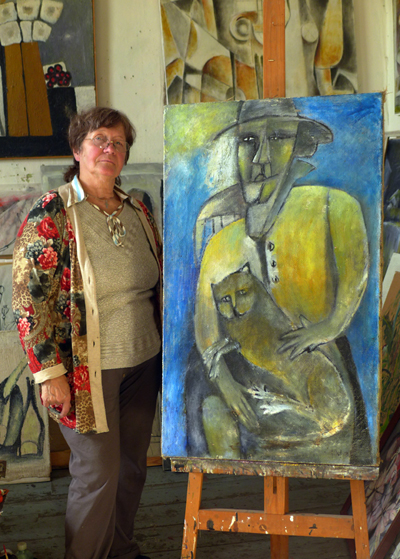
Julia Ivanova in her St. Petersburg studio beside an oil painting on an easel
Julia Ivanova (1944–2019) in her St. Petersburg studio
“There are still souls in Russia who believe that art is a Temple and its air is sacred. Julia Ivanova is just such an artist… a star.”
— Solomon Rossin, painter and mentor
Form & Metaphysics

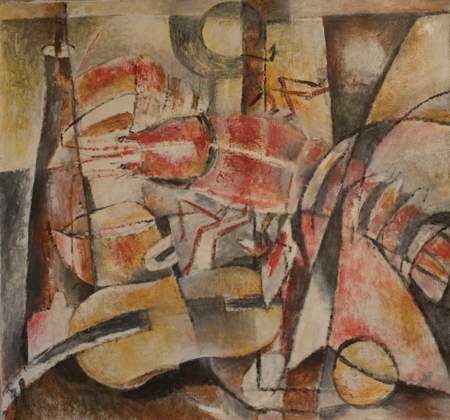
Still Life as Inner Architecture

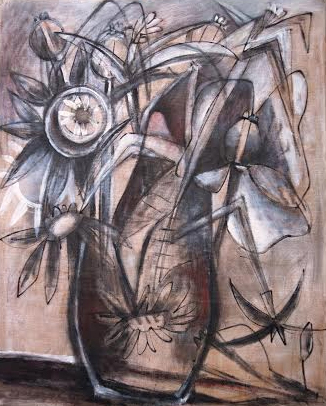
Still life stood at the center of Ivanova’s art. Humble studio objects—violins, mandolins, clay jugs, samovars, kerosene lamps, and wildflower bouquets—are stripped of everyday utility and rebuilt through rhythmic planes and dense, resonant oil pigment into timeless, contemplative presences.

Introspection

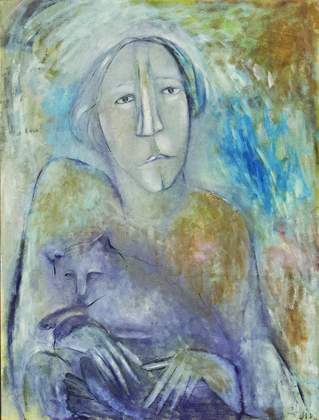
Self-Portraits & Human Presence

From the late 1980s onward, her self-portraits and figure studies turned inward with unsparing honesty and warmth. Often painted alongside a studio cat or rural animal companion, these canvases capture solitude, spiritual concentration, and quiet dignity.

Place & Memory

St. Petersburg & the Northern Village

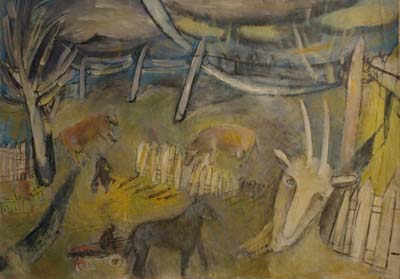
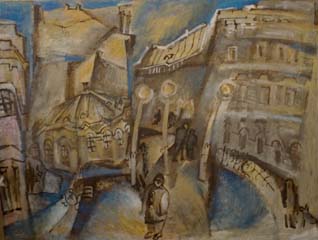
Whether painting the canals, bell towers, and enclosed courtyards of St. Petersburg or the working rhythms of Russian country life, Ivanova treated landscape not as literal topography, but as a living structure of ochre, ultramarine, and shifting northern light.

Catalogue Collections

View all collections →